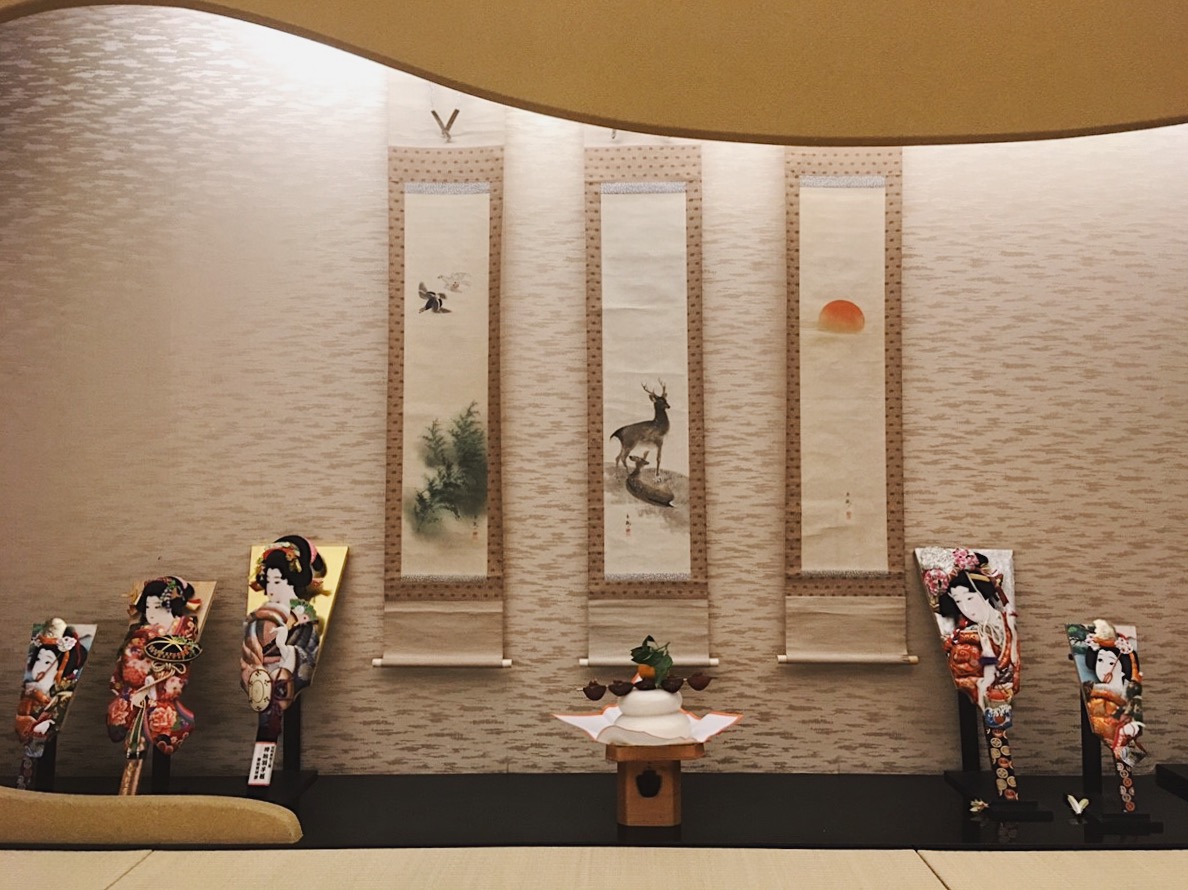
It is no doubt that Japan is well known for its culture of politeness. It is apparent anytime you visit a restaurant or shop in Japan and the staff smiles and bows during your entire encounter, no matter how demanding, irritating, or indecisive you might be acting. However, nowhere is Japanese politeness more evident than in a Ryokan. Ryokan are traditional Japanese inns that have been in existence since the 8th century A.D. The long held, rich tradition of the ryokan makes staying in one a true taste of Japanese culture and cuisine. This past winter vacation, during my time in Japan, I visited Takayama, a city in Gifu prefecture, with Yuki and his family, and we stayed at Honjin Hiranoya Kachoan Ryokan. Although we were only there for one night, the experience had the depth of many nights.
Upon arriving at the ryokan, we were greeted by a courteous staff member with a bow. He led us into the ryokan and invited us to remove our shoes. The ryokan had a large platform covered in tatami mats, on which shoes are not permitted. On the surrounding area of the tatami mat platform, nearest to the exit, was a shoe storage area. As soon as we took our shoes off to enter the tatami mats, the ryokan staff took our shoes and placed them in shoe shelves. On the other side of the tatami mat platform, the floor became carpet and right at the edge of the platform, there were slippers lined up for guests to wear around the hotel. A different hotel staff member, dressed in traditional Japanese wear, accompanied us into the elevator and up into our room. She politely showed us to our rooms and requested to know what time we would like to have dinner and go to the onsen, or hot spring, and once that was decided, she left us to settle in.
The room of the ryokan had an entrance area to leave the slippers at, but the main part of the room was covered in tatami mats. The center of the room contained a low table and two chairs with no legs. The left side of the room had a television and a closet. Once we had settled in, the staff member assigned to us returned with a variety of Japanese socks with the split toe as well as a variety of small bags to carry our belongings in to the onsen. She also set out our Yukata, which we would wear to the onsen and to dinner. Since we had quite a bit of time, Yuki and I decided to brave the cold and explore the streets of Takayama.
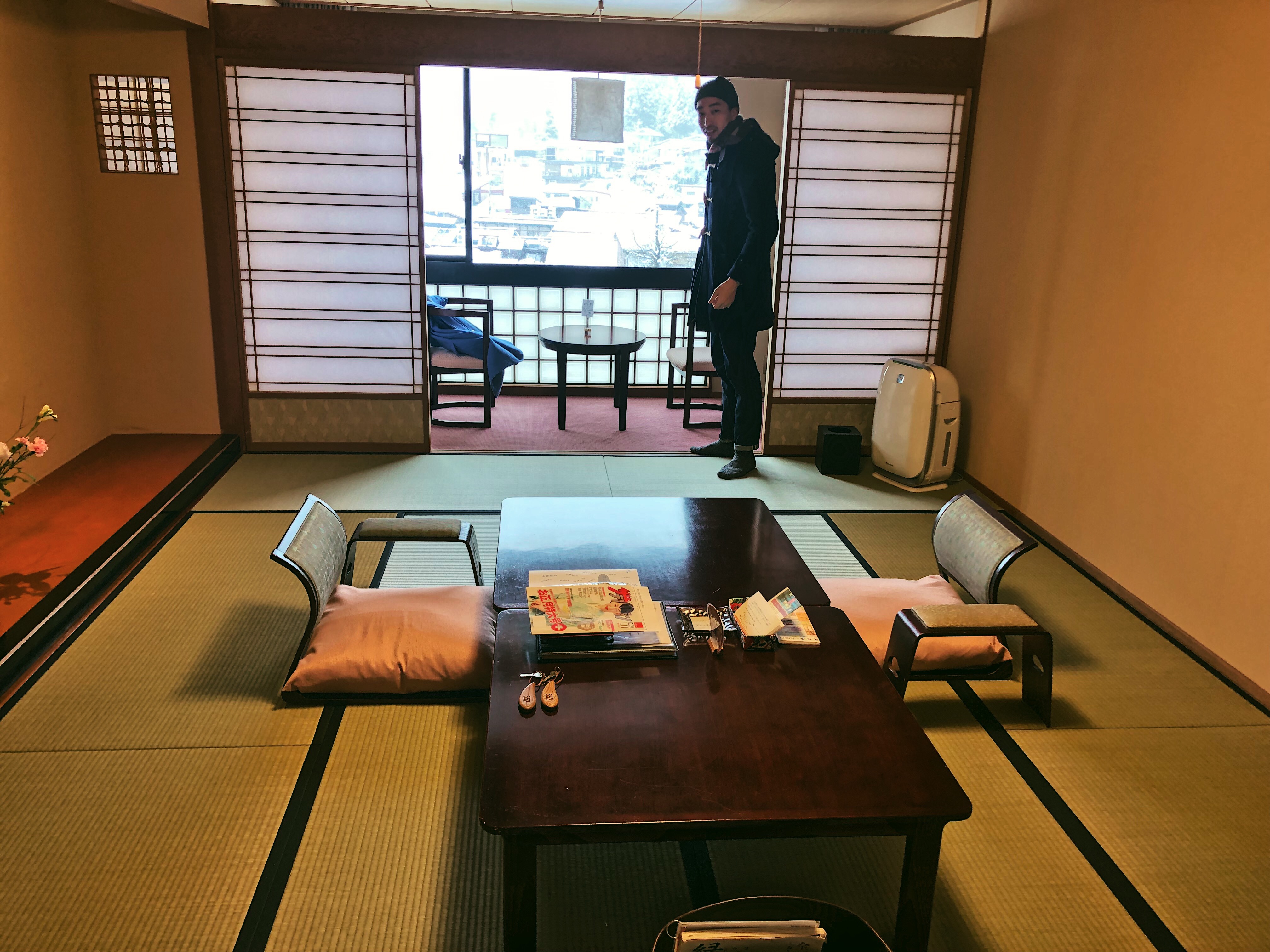
Yuki in our ryokan room
After strolling around Takayama, we returned to the ryokan to thaw and prepare for the onsen. I put on my Yukata, a size large I might add. I know I’m not as petite as the Japanese women, but a size large?! It was definitely too big. Anyway, I had to seek help from Yuki and my sister-in-law, Satomi, to put the Yukata on properly, since I couldn’t remember which side I was supposed to wrap over. In Japan, it is customary to wrap the left side over the right, since wrapping right over left is reserved for the dead; I really didn’t want to make THAT mistake. I went to the onsen accompanied by Satomi. The onsen was part of the ryokan but actually across the street from it, meaning we had to walk through the snow in our Japanese wooden sandals, called geta. However, since it was a such a short walk, we didn’t suffer at all and seeing the snow in the eve of the evening was quite lovely.

The weather in Takayama in the evening
Upon arrival at the onsen, the staff member there asked us to take our shoes off. (Surprised?) The area adjacent to the onsen had large buckets to put your clothes in in addition to an area with mirrors, hair dryers, and beauty and care essentials such as hand and body lotions and make up remover. I definitely felt pampered! Before entering the onsen, we took a quick shower in a communal shower area with several shower heads and stools. Shampoo and face wash were also provided! Because the communal shower area had a small opening to the outside, making it rather chilly, getting into the onsen of very hot water afterwards felt wonderful initially. However, a couple of minutes later, I started feeling like I couldn’t breathe because of the heat. Satomi, however, seemed perfectly comfortable in the water. While we chatted away in basic Japanese about our lives, I started scooting part of my body out of the water, and as she started to notice my very obvious discomfort, she asked if I was okay. Of course, I told her I was perfectly fine, not wanting to ruin the experience. Yet, a few minutes minutes later, she revealed that my face was very red. Now, at this point, my forearms and fingertips were tingling and I felt lightheaded; I sincerely thought I was going to pass out at any moment and Satomi would have to carry my not-so-petite self back to the ryokan all by herself. She asked if I wanted to get out, and I said yes enthusiastically, murmuring something along the lines of ‘we should probably go back and get ready for dinner’. I left the onsen, marveling at Satomi’s ability to withstand the hot water. Later, I asked Yuki how his soak in the onsen had been, and he merely replied that it had felt fantastic and relaxing. That made one of us!
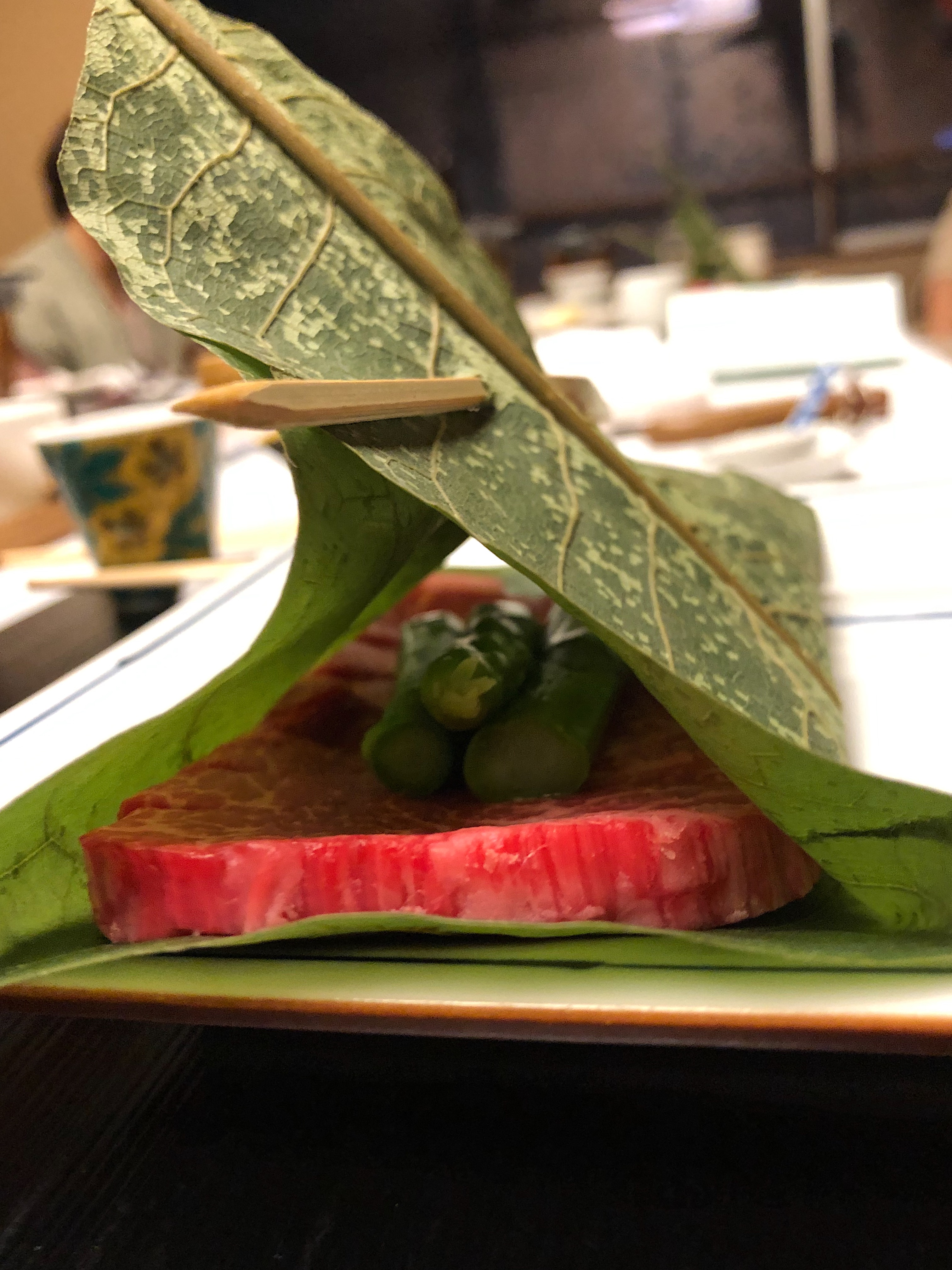
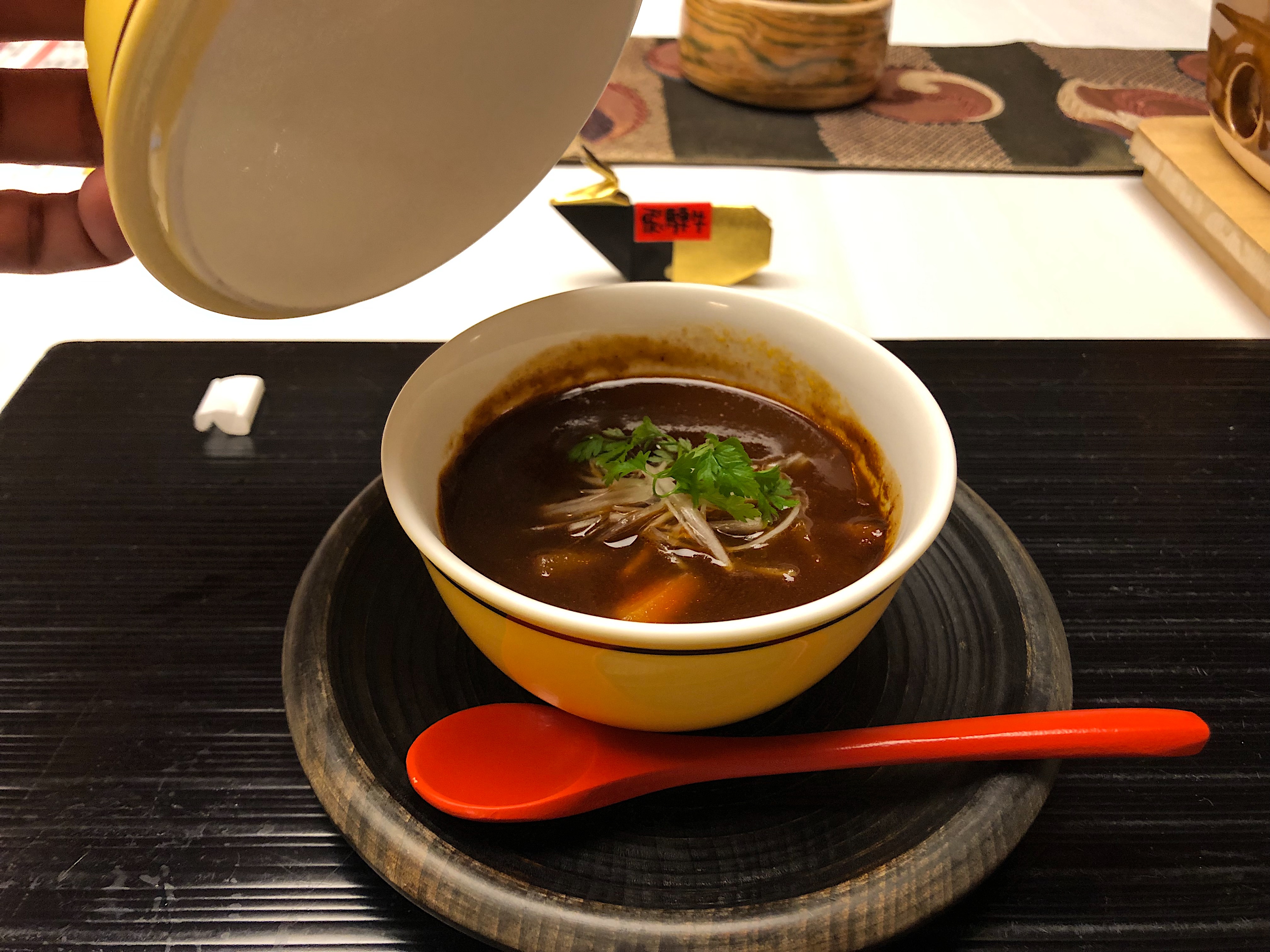
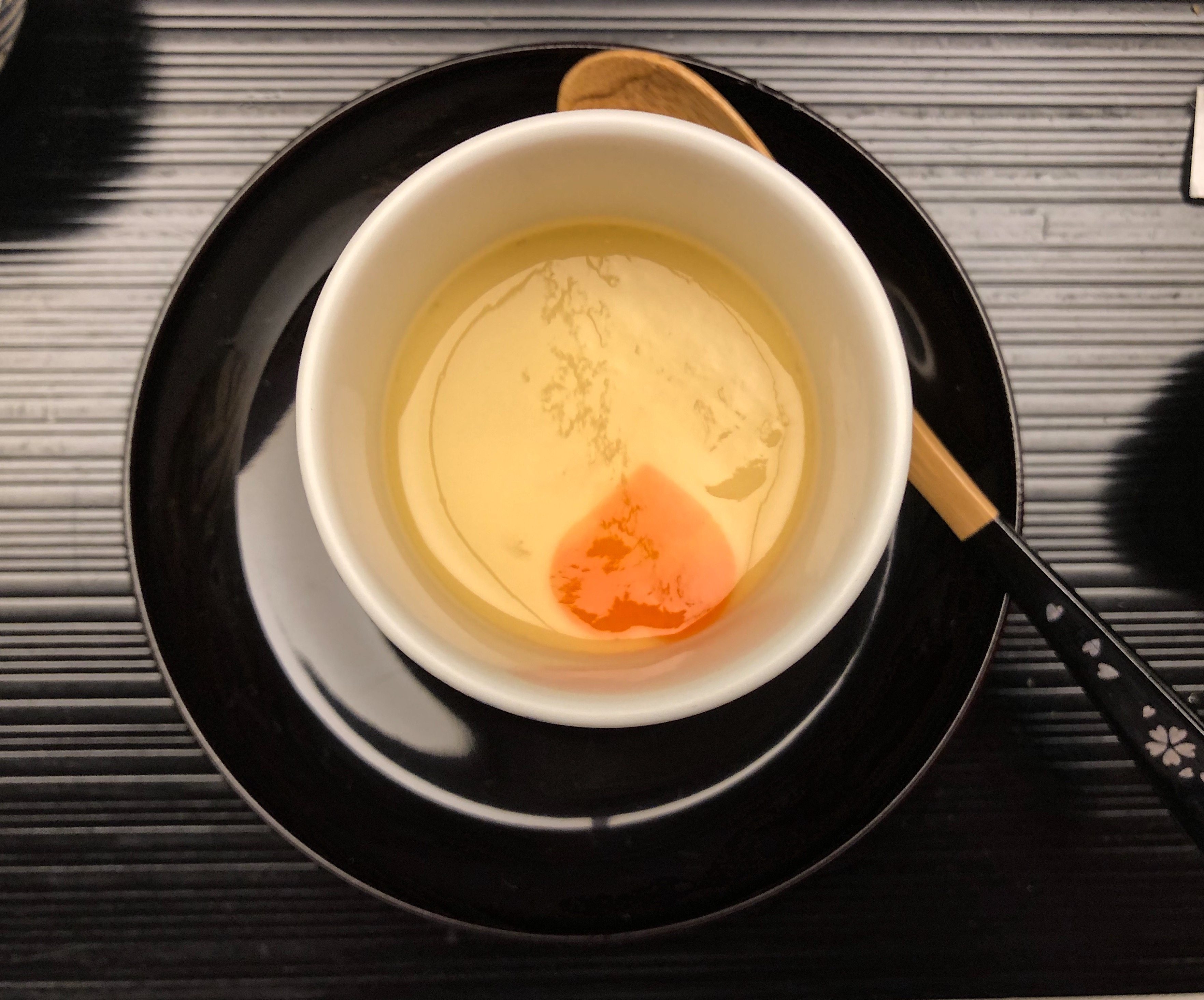
For dinner, we had our own private room and the staff member that had been taking care of us came to attend to us for dinner. The dinner was in a kaiseki style, meaning it was a traditional multi course dinner. It seemed that the main theme of the diner was meat, because almost every dish contained meat in some form or variation. The individual courses of the meal were not served all at once, but were instead brought in periodically by our sweet staff member as we finished the previous dish. I awaited each coming dish with anticipation, even though I was getting fuller by the moment, and was even a bit disappointed when dessert was brought in since it represented the end of the meal. Every single dish was exquisite and beautifully presented. We also tasted a variety of Japanese sake and beer, including a white milky sake called Nigori Sake that I had never tasted before. The meal took about two hours to complete, and we were stuffed by the end of it.




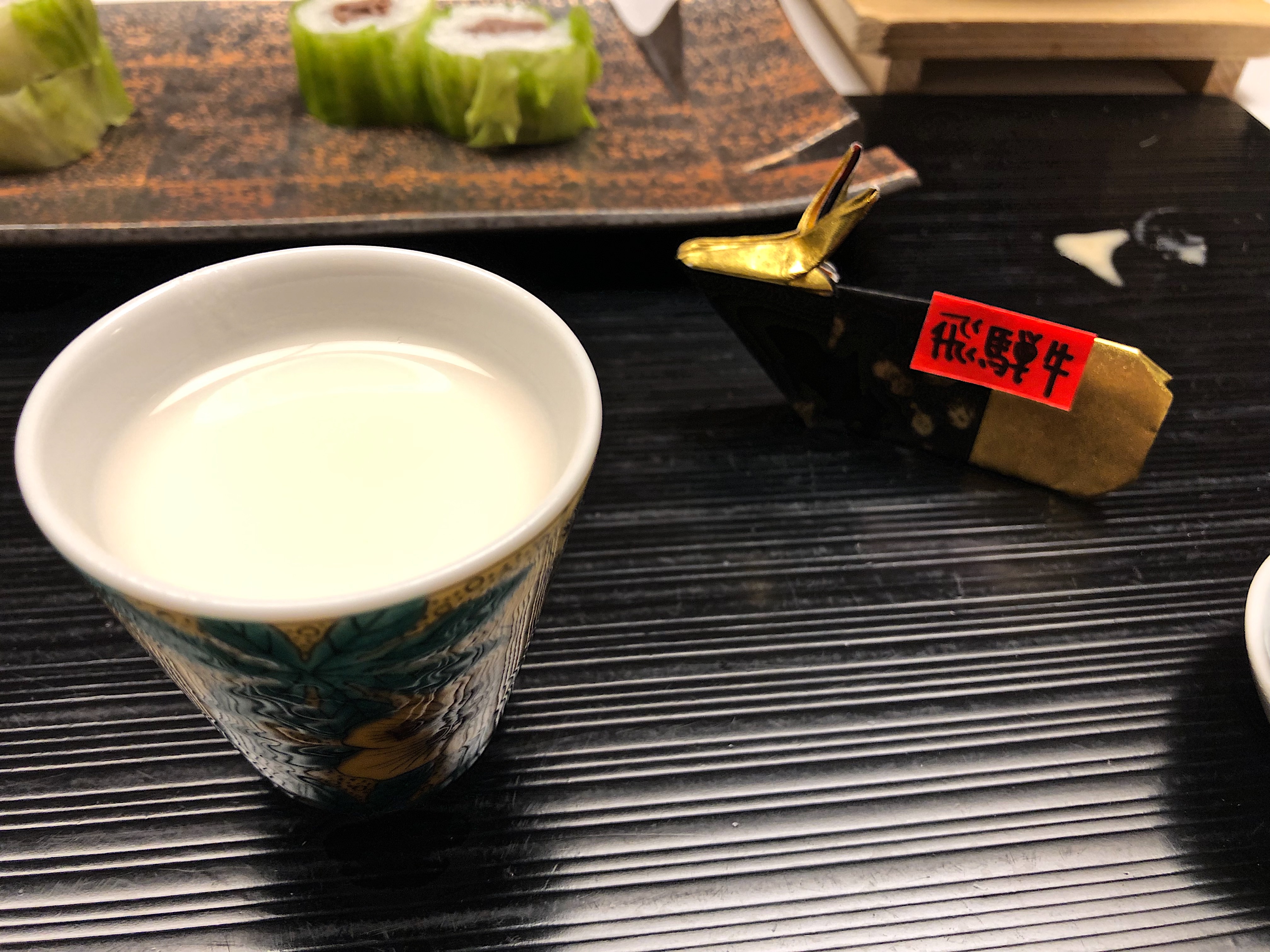
the milky sake 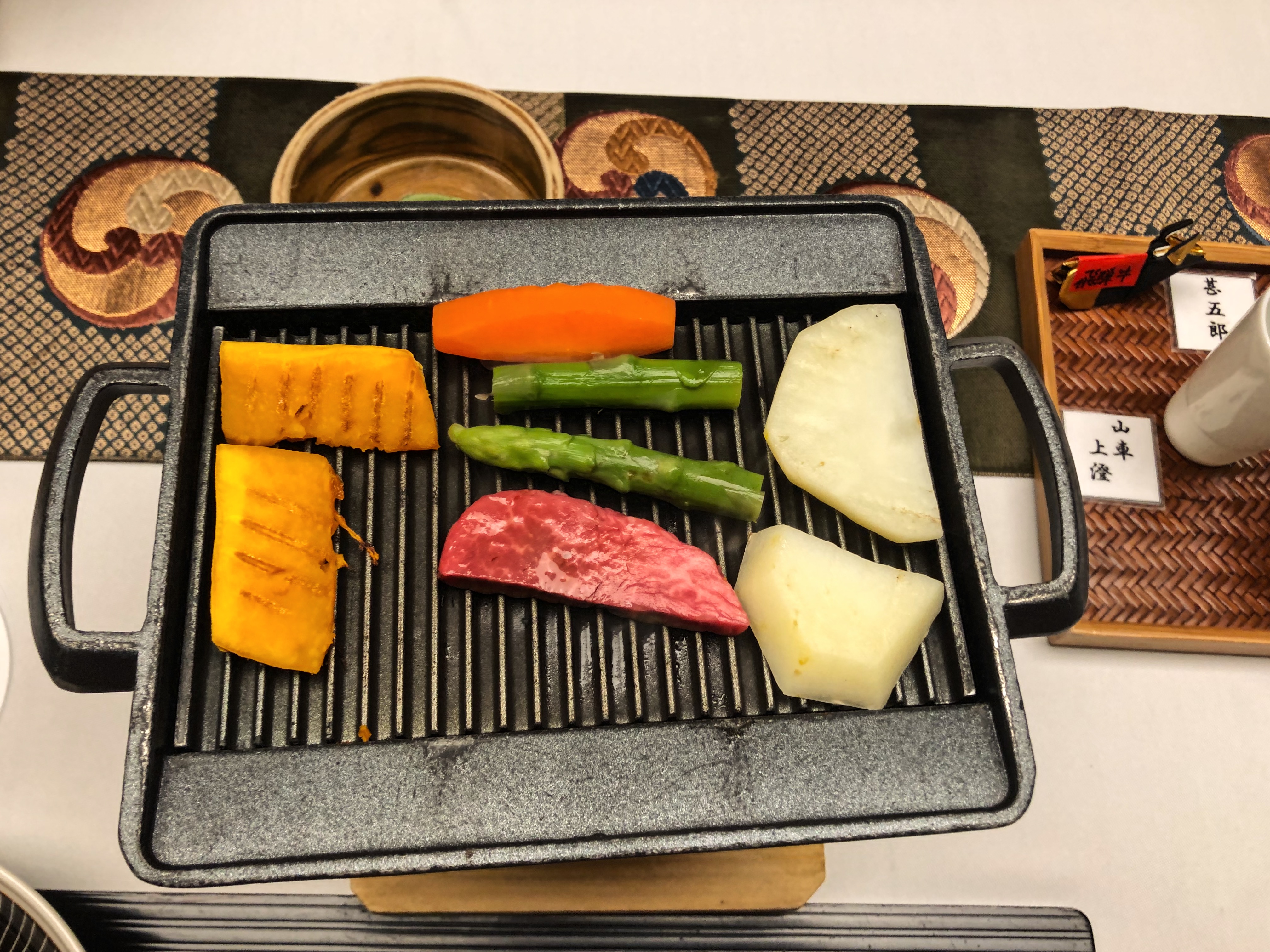

After dinner, we arrived in our room to find that the room had been made up by the staff with two futon on the tatami mats in the center of the room. The table and chairs previously present had been moved over to the side. A futon is a traditional style of Japanese bedding, consisting of a padded mattress, a quilt, and a pillow. While it may not seem very comfortable initially, I woke up well rested and with no back pain! The next morning, we had breakfast at the ryokan, another kaiseki meal, attended by another staff member who was eager to practice her English. Although I can understand some Japanese and enjoy practicing it, I was grateful to talk to her in English for just a moment to give my brain a break. When we returned to our room to prepare for our departure, the staff had removed the futon and placed the table and chairs back in the center of the room. We gathered our belongings and then we bid farewell to Honjin Hiranoya Kachoan Ryokan and to Takayama.
Staying at the ryokan allowed me to experience Japanese culture intimately as well as savor high quality Japanese food. It was an excellent way to immerse myself in the culture and it is an experience I would definitely recommend to anyone traveling to Japan.

Cover photo: Decor in the main room of the ryokan
 vivewell
Leave a comment